Pruning and crown reduction
Good pruning is hard to spot afterwards. The tree keeps its shape, and it carries less weight, catches less wind and lets more light through to the garden below.
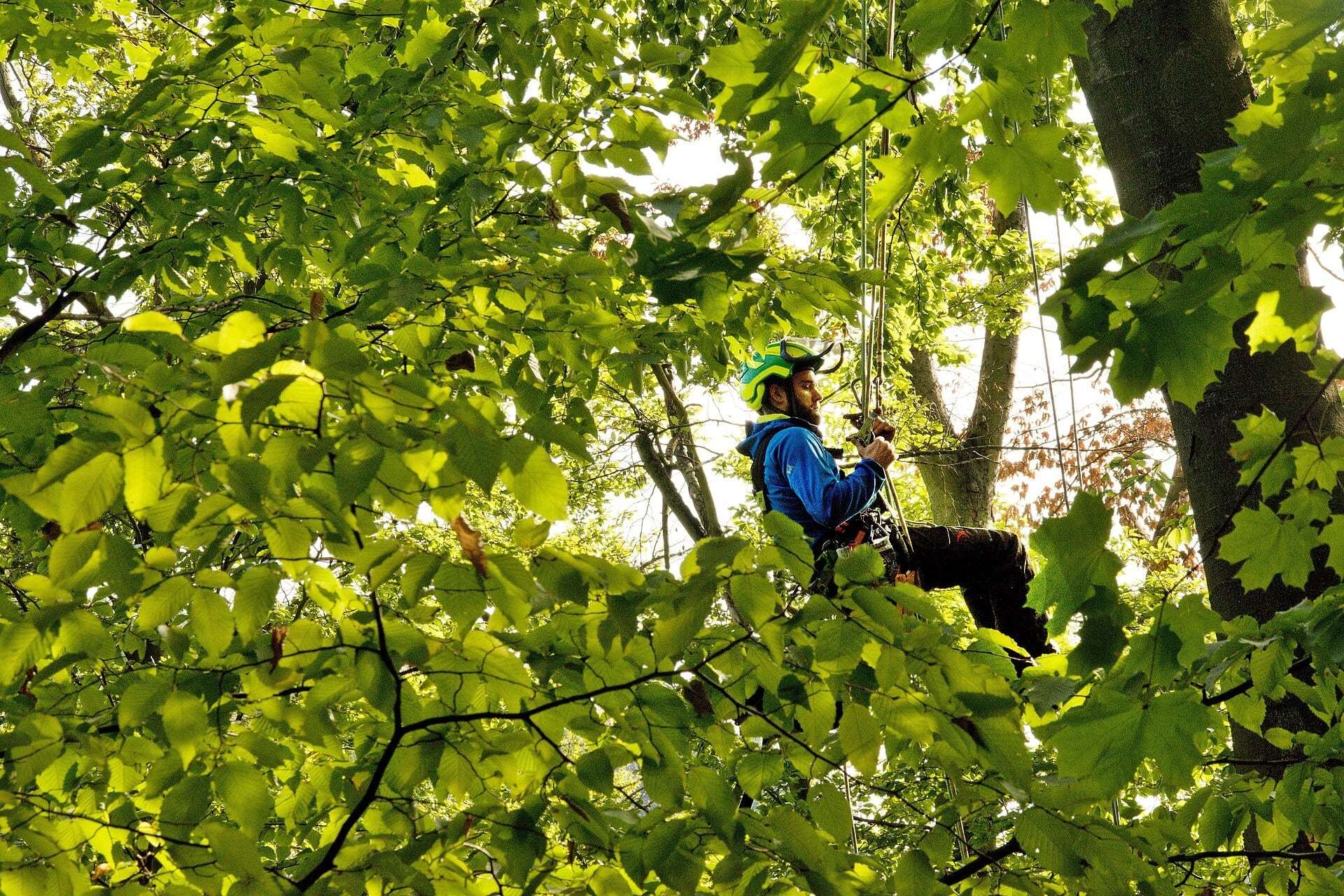
What’s included
- Crown cleaning: dead, diseased and rubbing branches removed
- Crown reduction to take weight off overextended limbs
- Crown raising for clearance over roofs, driveways and walkways
- Structural pruning for young trees
- Cabling and bracing where a union needs support
When pruning is worth doing
- Branches touching the roof, eaves or service wires
- Dead branches thicker than your wrist
- A long, heavy limb over a play area, deck or neighbour’s yard
- Dense shade that is thinning the lawn or garden underneath
Questions we hear
How much can you take off?
As a rule, no more than a quarter of the live crown in one season, and less on old or stressed trees. Taking more starves the tree and triggers weak regrowth.
What is the difference between crown reduction and topping?
Reduction shortens a limb back to a healthy side branch that can take over. Topping cuts straight across, leaving stubs that decay. We don’t top trees.